Full-Tab 26650 LiFePO4 Cell for High-Rate Packs
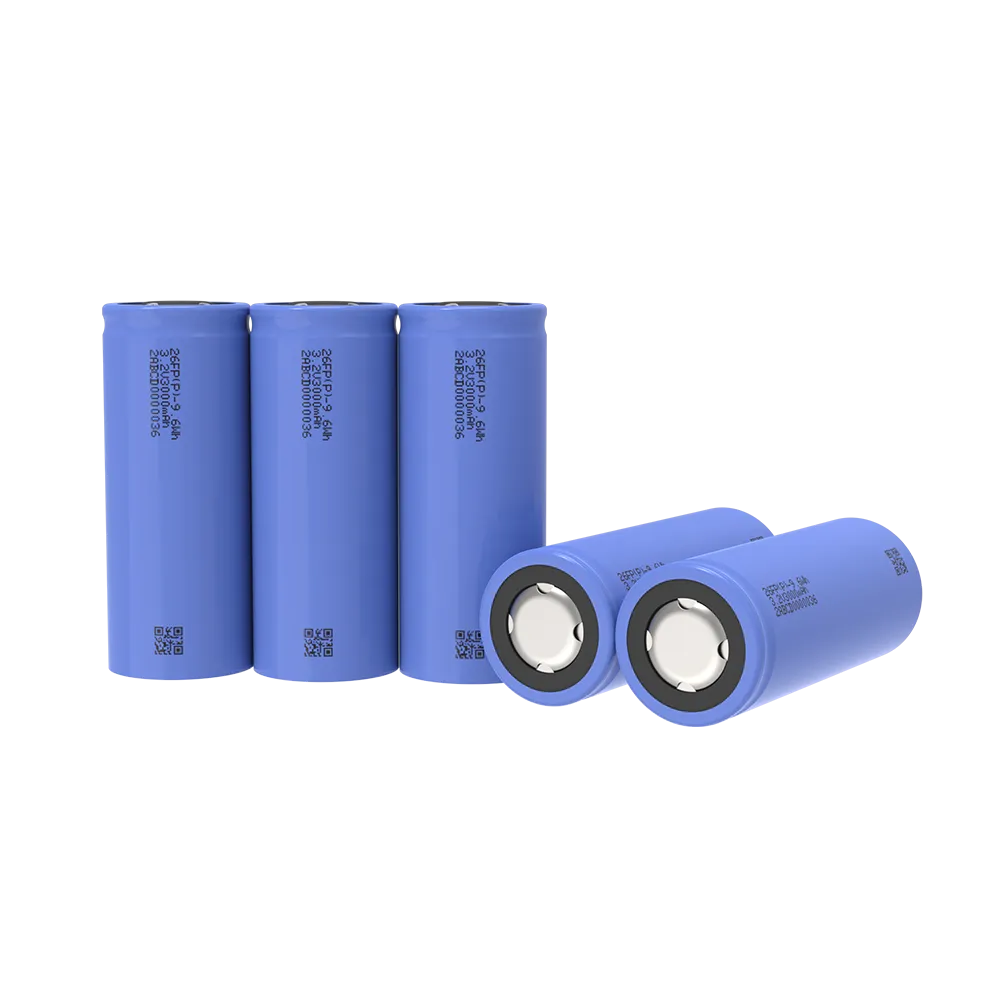
Working with a LiFePO4 battery cell manufacturer usually comes down to one question: does the cell still deliver its rated current in the fifth year of a pack? The JGPFR26650P-3000mAh-3.2V answers that with a full-tab electrode, an AC internal resistance of 5 mOhm or less and a 60 A continuous discharge rating, which is why it turns up in BBU, UPS and AGV builds where LiFePO4 battery solutions have to keep working hot. The published figures for the cell, the certification file set and the order points are set out below.
- ModelJGPFR26650P-3000mAh-3.2V
- Capacity3.0 Ah / 9.6 Wh
- AC resistance5 mOhm or less
Buyer checklist
Eight Points That Decide a Full-Tab 26650 Cell Order
A high-rate cell is bought on numbers, not on a photograph. These eight points are the ones that decide whether a quotation can be compared with another supplier at all, and each row names the signal that should slow an order down.
| Order point | What good looks like | Red flag |
|---|---|---|
| 1. Model, not just the size | The model number, nominal voltage and energy are stated: JGPFR26650P-3000mAh-3.2V, 3.2 V, 9.6 Wh. | A quotation for a “26650 cell” with no model, capacity or energy figure attached. |
| 2. Internal resistance | An AC internal resistance figure, 5 mOhm or less, quoted for the exact model. | Resistance described as low, or a DC value given for a cell that is specified in AC terms. |
| 3. Continuous and pulse discharge | Both numbers are separated: 60 A continuous and a 150 A pulse for 5 s. | One maximum discharge figure that mixes continuous duty with a short pulse. |
| 4. Charging rate | The charge rate (3C) and the maximum charging current (9 A at 25 °C) stated together with the temperature. | Fast charge claimed without a current, a rate or a temperature condition. |
| 5. Cycle life against a stated test | 3,000 cycles at 1C charge / 1C discharge, 100% depth of discharge, with 80% or more capacity retention. | A cycle count with no depth of discharge and no current, so it cannot be compared. |
| 6. Size, tolerance and weight | 26.45 mm diameter, 65.7 ± 0.3 mm height and 82 g per cell, so the pack drawing can be checked. | Nominal 26650 dimensions with no tolerance and no weight. |
| 7. Cell temperature window | Charge 0 to 60 °C and discharge -30 to 65 °C, quoted at cell level. | An operating range quoted for the finished pack only, leaving the cell unstated. |
| 8. Certification file set | IEC62133, UN38.3, MSDS, CE, CB, RoHS and REACH, each tied to the approval question it answers. | A folder of certificates with no key saying which file answers which question. |
What the JGPFR26650P-3000mAh Cell Actually Is
It is a cylindrical lithium iron phosphate cell built for current, not for capacity. The full-tab electrode changes where the current leaves the wound stack: the collector is bonded along a continuous edge instead of a single tab, so contact area rises, the electron path shortens and heat stops collecting around one weld. Every figure below is published on the product page.
- Full-tab electrode construction, with the current collector bonded along a continuous edge instead of a single tab.
- AC internal resistance of 5 mOhm or less, the figure that limits heat and voltage sag under load.
- 60 A continuous discharge and a 150 A pulse for 5 s, so one cell can carry a high-rate duty cycle.
- 3C charging and a maximum charging current of 9 A at 25 °C.
- 3,000 cycles at 1C/1C with 100% depth of discharge and 80% or more capacity retention.
- 82 g per cell at 26.45 mm diameter and 65.7 ± 0.3 mm height.
Published Figures for the JGPFR26650P-3000mAh Cell
These are the values printed on the product page, and they belong to the 26FP(P) power-rate grade. The same family table also lists a 4000 mAh high-temperature grade and the capacity grades, so a quotation for a 26650 LFP cell should name the grade before the numbers are compared.
| Property | JGPFR26650P-3000mAh-3.2V |
|---|---|
| Model | JGPFR26650P-3000mAh-3.2V (26FP(P)) |
| Chemistry | Cylindrical LiFePO4 (LFP) |
| Nominal voltage | 3.2 V |
| Nominal capacity | 3.0 Ah |
| Nominal energy | 9.6 Wh |
| AC internal resistance | 5 mOhm or less |
| Charging current | 3C |
| Maximum charging current | 9 A at 25 °C |
| Maximum discharge current | 20C (60 A) continuous |
| Pulse discharge | 150 A for 5 s |
| Cycle life | 3,000 cycles at 1C/1C, 100% DOD, 80%+ retention; 1,500 cycles at 2C/10C |
| Diameter | 26.45 mm |
| Height | 65.7 ± 0.3 mm |
| Weight | 82 g |
| Charging temperature | 0 to 60 °C |
| Discharge temperature | -30 to 65 °C |
| Certification | IEC62133, UN38.3, MSDS, CE, CB, RoHS, REACH |
Where Full-Tab LiFePO4 Cells Are Used
This cell is chosen where the pack has to deliver current quickly and then sit at high state of charge for long periods. These are the application groups it is quoted against.
BBU and data centre backup
Backup battery units that have to answer a high-rate demand the moment mains power drops, including AI server backup and critical electronic equipment.
AGV and AMR packs
Mobile robots and automated material handling equipment, where the pack sees frequent high-rate pulses through a working shift.
UPS battery systems
Online and industrial UPS, and emergency backup power, where a cell that sags under load turns into a transfer failure.
Power tools and garden equipment
Portable tools, lawn and garden equipment and cleaning equipment that draw short, heavy bursts of current.
Wholesale pack building
Packs assembled from cells that have to match across a wholesale order: same capacity band, same internal resistance, same ageing behaviour.
OEM and ODM projects
Cell selection through pack assembly in one operation, with the LFP material and the cell lines under the same quality system.
Certification, Supply and Quotation
A cell approval file and a pack quotation come from two different places, so it helps to know what the supplier already holds before the order is placed.
- Certification file set — IEC62133 for cell level safety, UN38.3 for transport, plus MSDS, CE, CB, RoHS and REACH for market access and handling.
- Cell matching for packs — Cells supplied to a consistent capacity band and internal resistance, so a repeat order behaves like the first one.
- Material and cell capacity — A 17,826 m² LFP material plant with 20,000 tons of cathode capacity a year, feeding 5 GWh of automatic cell capacity.
- Pack assembly — 5 GWh of automatic pack capacity across 20 automated lines, so a change on the cell side and the assembly side is made together.
- Quality records — A TS16949 quality management system that ties cells and finished packs back to their production records.
- Quotation inputs — Send the continuous and pulse current the pack has to deliver, the duty cycle, the cell quantity and the approval files your customer asks for.
Send the Pack Duty Cycle and Get a Cell Recommendation
Tell the supplier the continuous and pulse current the pack has to deliver, how long each burst lasts, the charge window available and the quantity for the first order. The answer should state the grade, the matching tolerance, the certification files that come with it and the lead time.
Related Products
Other cells from the same LFP family, listed with the grade that separates one from another.

26650-4000mAh-3.2V LiFePO4 Cell
The high-temperature LFP variant: 4000 mAh, 1C charging, 3C (12 A) discharge and a charge window up to 75 °C.
26650-3600mAh-3.2V LiFePO4 Cell
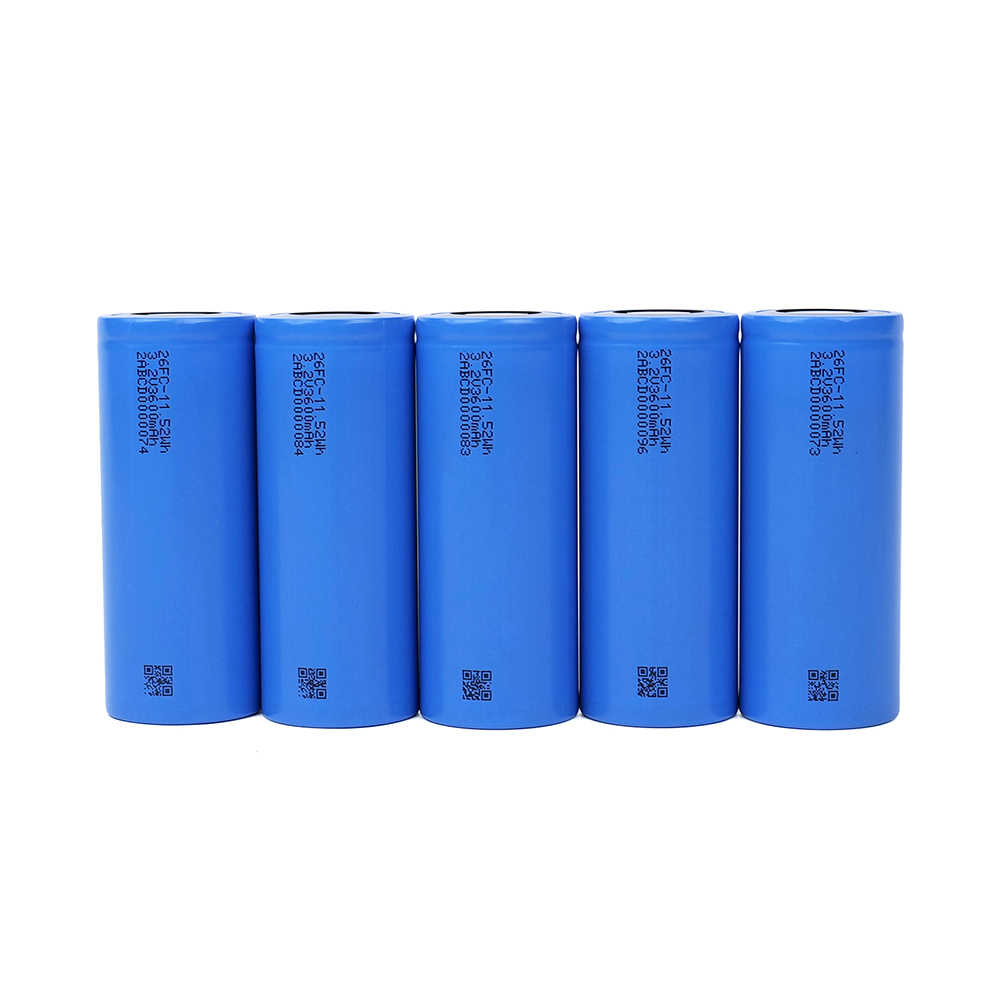
The capacity grade above the target cell: 1C charging, 3C (10.8 A) discharge and 2000 cycles at 100% DOD.
18650-1100mAh-3.2V LiFePO4 Cell
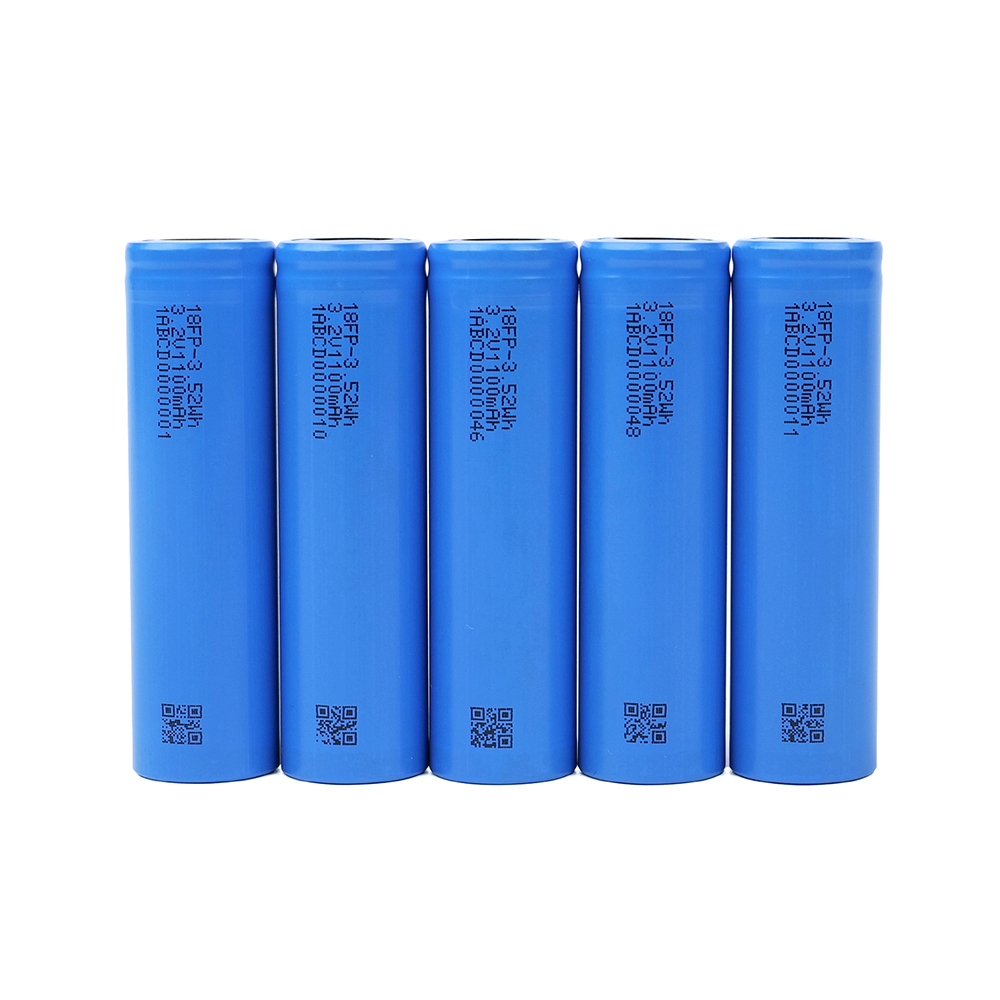
The 18650 power-rate cell: 5C charging, 30C (33 A) discharge and internal resistance at or below 18 mOhm.
Frequently Asked Questions
What makes a full-tab cell different from a standard 26650?
A full-tab cell bonds the current collector along a continuous edge instead of one or two small tabs. That raises the contact area and shortens the electron path, which is how the JGPFR26650P-3000mAh-3.2V reaches an AC internal resistance of 5 mOhm or less and a 60 A continuous discharge rating in a 26650 can.
What are the main published figures for this cell?
Nominal voltage 3.2 V, nominal capacity 3.0 Ah (9.6 Wh), AC internal resistance at or below 5 mOhm, 3C charging current, 60 A continuous discharge, 150 A pulse discharge for 5 s, and a weight of 82 g at 26.45 mm diameter by 65.7 mm height.
How long is the cycle life?
The product page rates the cell at 3,000 cycles at 100% depth of discharge under 1C charge and 1C discharge, with capacity retention of 80% or more. A 2C charge / 10C discharge test is quoted at 1,500 cycles at 100% depth of discharge.
What temperature range does the cell work in?
Charging is rated from 0 to 60 degrees Celsius and discharging from -30 to 65 degrees Celsius. The maximum charging current of 9 A is quoted at 25 degrees Celsius.
Which applications is the full-tab 26650 used in?
BBU and data centre backup power, AI server backup, AGV and AMR battery packs, online and industrial UPS, power tools, and lawn, garden and cleaning equipment.
Which certification files come with the cell?
UN38.3, MSDS, CE, CB, RoHS and REACH, together with IEC62133 for cell level safety testing. Each file answers a different approval question: IEC62133 covers cell safety, UN38.3 covers transport, and the rest cover market access and handling.
