Robot Battery Pack Selection Guide
GoldenCell supplies robot lithium battery packs for AMRs and robotic production cells, and builds customized robot lithium battery packs around each machine’s voltage, capacity and connector requirements.
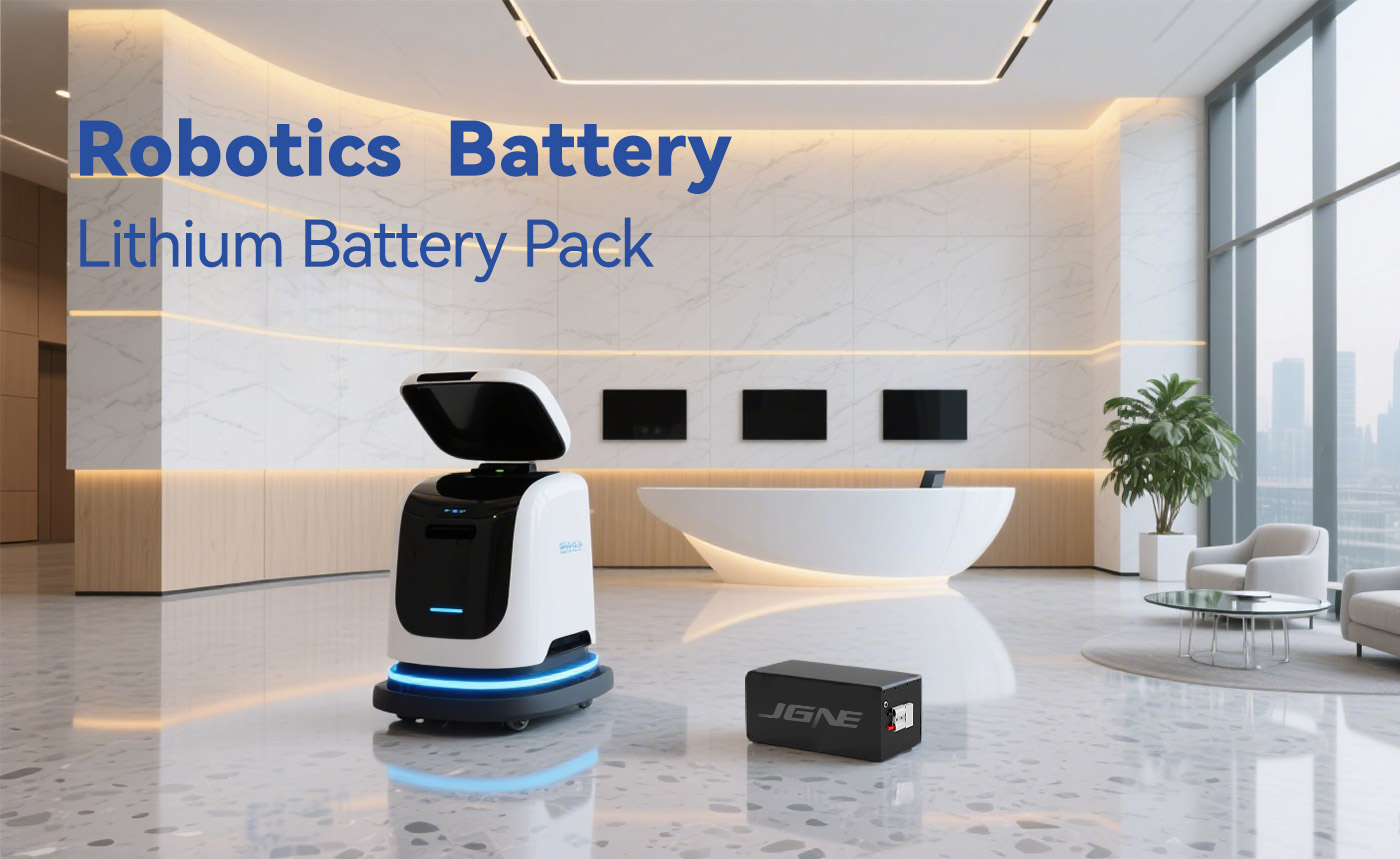
Reference Configurations, Not Fixed SKUs
These are the four configurations currently published for robot applications. Read each row as a benchmark envelope — a voltage, current and physical starting point that the final pack is built around.
| Robot type | Battery specification | Charge voltage | Working current | Battery weight | Battery dimension |
|---|---|---|---|---|---|
| Rail Inspection Robot | 38.4V 6Ah | 43.2V | 2A | 23.5kg | (228±2) × (105±1) × (75±1) mm |
| Commercial Delivery Robot | 25.6V 60Ah | 28.8V | 25A | 18kg | (320±3) × (190±2) × (238±3) mm |
| Heavy-Duty Transport Robot | 51.2V 80Ah | 57.6V | 100A | 45kg | (640±5) × (620±5) × (110±3) mm |
| Lifting Transport Robot | 51.2V 19.2Ah | 57.6V | 19.2A | 58kg | (460±4) × (109±1) × (150±2) mm |
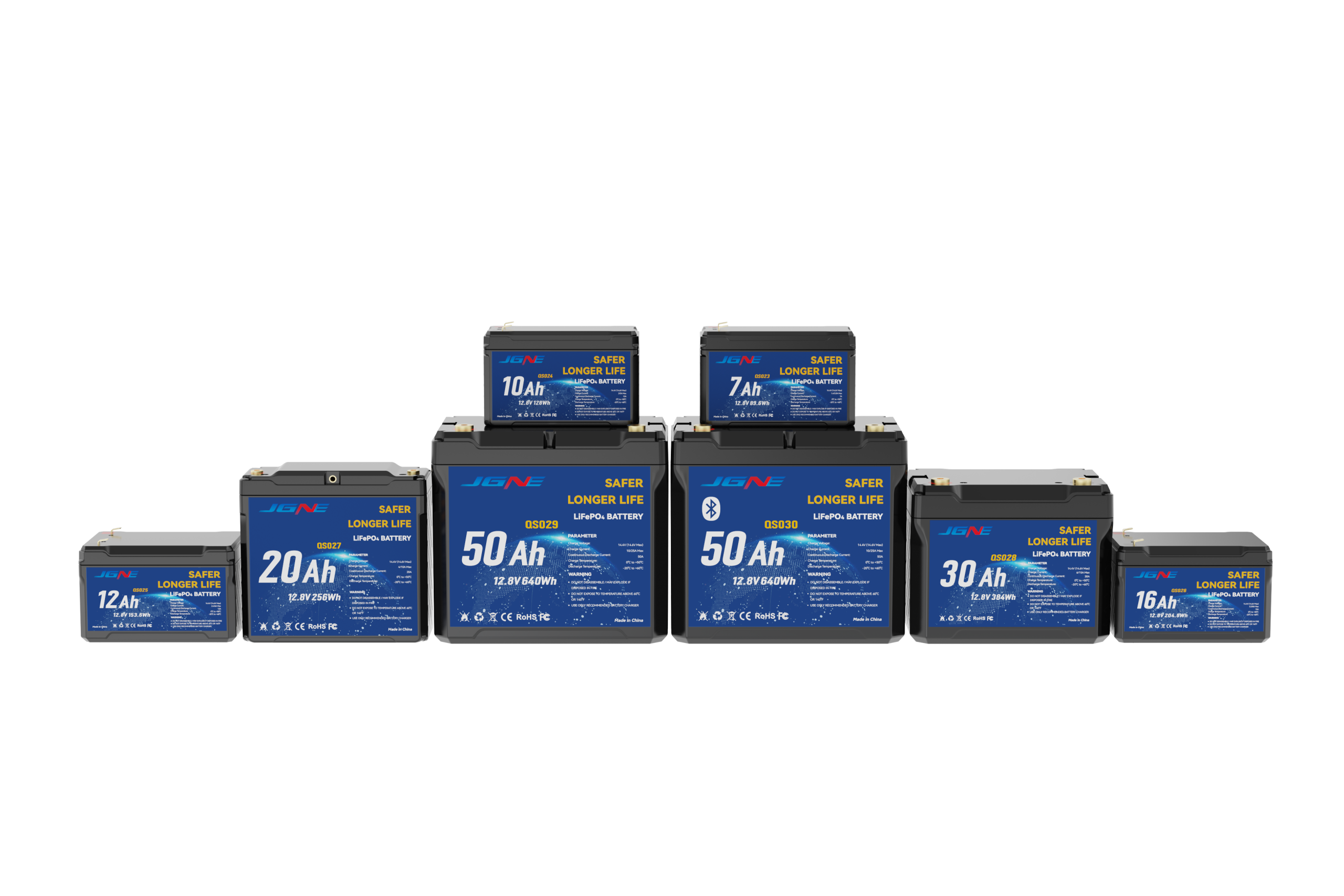
How to read this table
Every row above is a published reference, not an orderable catalogue item. Voltage, capacity, working current, weight and housing dimensions are confirmed per project, and the figures shown are the benchmark your own specification is measured against.
Customization starts here
Cell selection, pack layout and enclosure design are reviewed together so the finished pack can be manufactured reliably and supplied consistently over the life of the programme — beginning with small-batch validation and moving through to volume supply.
Voltage Architecture: 25.6V vs 51.2V
Two voltage classes dominate the published robot references. The choice changes current draw for the same mechanical power, and with it the cable, connector and motor you specify.
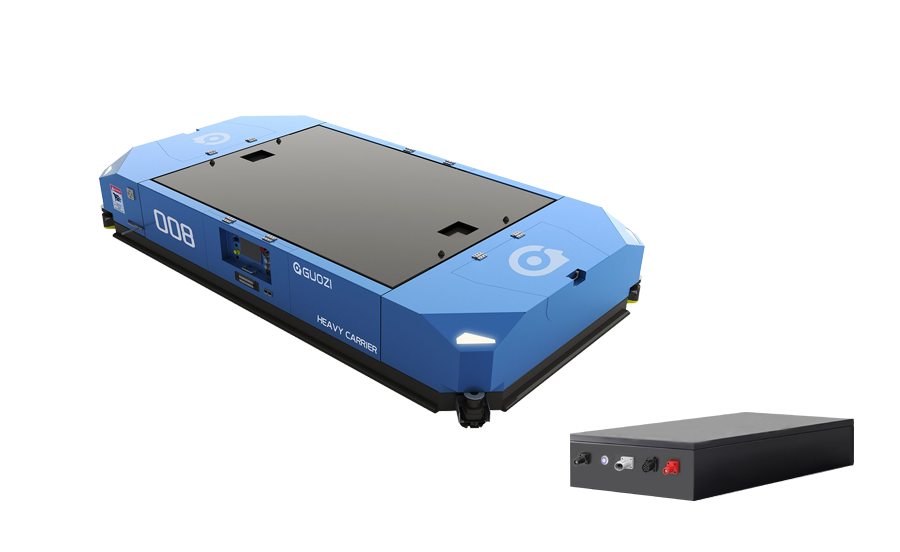
Lower voltage, published on the delivery reference
The commercial delivery reference is published as 25.6V 60Ah with a 28.8V charge voltage and 25A working current — a moderate current envelope at a comparatively low system voltage.
- Choose 25.6V if your drive and motor selection is already built around a lower system voltage.
- Choose it if your charge infrastructure is sized for a 28.8V charge voltage.
- Choose it if the working current stays in the range shown on the delivery reference and you want to keep conductor sizing modest.
Higher voltage, published on transport references
Both the heavy-duty transport (51.2V 80Ah) and lifting transport (51.2V 19.2Ah) references use the same voltage class with a 57.6V charge voltage, while working current differs sharply between them at 100A and 19.2A.
- Choose 51.2V if your platform needs higher power without pushing current higher — more voltage means less current for the same power.
- Choose it if your connectors, cabling and charger are rated for a 57.6V charge voltage.
- Choose it if your working current is genuinely high; the heavy-duty reference shows what a 100A envelope looks like.
One reference sits outside this comparison
The rail inspection reference runs at 38.4V 6Ah with a 43.2V charge voltage and just 2A working current. It is a low-current inspection configuration, so it does not belong in the 25.6V versus 51.2V decision — treat it as its own case.
Mechanical Envelope and Durability
Once the electrical architecture is fixed, the pack has to physically survive the robot. Dimensions carry tolerances, mass has to be carried by the chassis, and vibration has to be designed out.
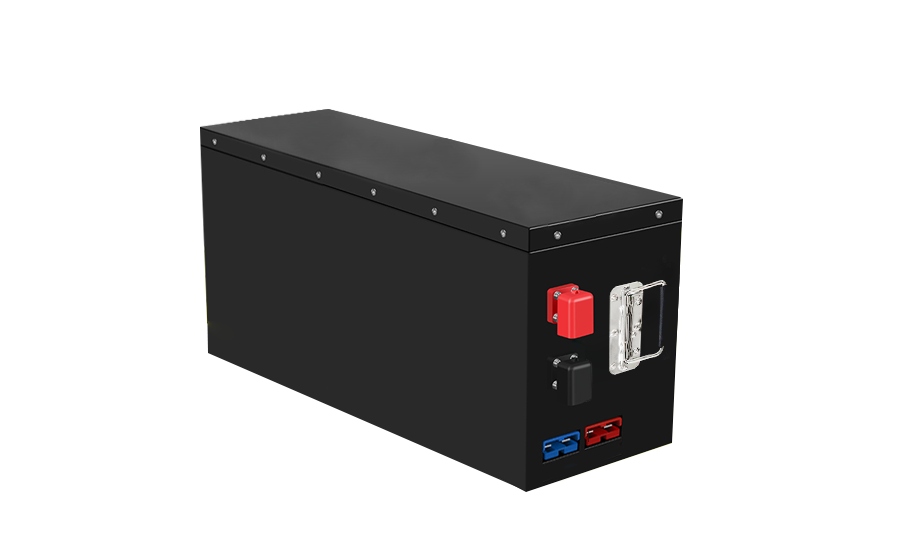
What the published dimensions tell you
The four references carry tolerances from ±1 mm on the tightest axis to ±5 mm on the largest face, so the mounting bay needs clearance rather than an exact fit. Mass ranges from 18 kg to 58 kg across the references, which is a chassis and service-handling decision as much as a battery decision.
The largest published footprint, at (640±5) × (620±5) × (110±3) mm for the heavy-duty transport reference, is the one to model first if your bay is shallow and wide.
Durability position
The packs have undergone impact resistance testing for shocks and collisions, and the LiFePO4 chemistry is described as safe and durable with reduced risk of overheating, short circuits or explosions.
Mechanical checklist before you commit
- Bay dimensions plus clearance for the published ±1 mm to ±5 mm tolerance band.
- Bracket and tray rating against the pack mass, including service access.
- Mounting orientation and fastener access in the assembled robot.
- Cable routing around the enclosure so no load path is carried by the leads.
Shock and vibration questions worth asking
- Which surfaces of your robot see repeated impact during normal work?
- Is the pack hard-mounted to the chassis or isolated from it?
- Does the enclosure need to carry a lift point or lifting hardware?
- How will the pack be removed for maintenance without disturbing alignment?
BMS and Communication
The packs include an advanced battery management system with real-time safety monitoring and multi-protocol communication. What matters at specification stage is what your robot controller needs to send and receive.

| Buyer question | Why it decides the pack |
|---|---|
| Which protocol does my controller speak? | Multi-protocol communication is supported, so bring your controller’s protocol to the specification review and it is configured against it. |
| What telemetry does my fleet actually use? | Real-time safety monitoring is built in; the data your dashboard or maintenance team consumes determines how the BMS is set up. |
| Where should the safety thresholds sit? | Monitoring is real-time, so the thresholds you define for current, temperature and state become the protection behaviour of the pack. |
| One prototype or a whole fleet? | The same BMS approach needs to hold from small-batch validation through volume supply, so consistency is agreed early. |
| Who documents it? | Standardised documentation is provided for distributors and partners, which keeps the communication interface traceable. |
Bring your interface, not a guess
Protocol, telemetry set and threshold values are confirmed against your controller during the specification discussion rather than assumed from the reference table.
Chemistry and Cycle-Life Trade-off
Both NCM and LiFePO4 cells are offered. The published performance language on this product family is built around LiFePO4, so read the two options differently.

Choose LiFePO4 if…
- Replacement interval drives your total cost — LiFePO4 batteries often exceed 2000 charge-discharge cycles.
- Safety and durability sit high on the requirement list, with reduced risk of overheating, short circuits or explosions.
- Your robots work across a wide temperature range, from sun-exposed sites to cold warehouses.
- Impact exposure is expected; the packs have undergone impact resistance testing for shocks and collisions.
- You need compact, lightweight packaging that still supports efficient movement and larger covered areas.
Choose NCM if…
NCM is listed on the product page as a cell option alongside LiFePO4. No cycle-life or energy-density figures are published for the NCM route on this family, so the trade-off is settled case by case rather than from a table.
- Your application brief already points to NCM cells and the specification review can confirm the fit.
- Cycle life is not the controlling requirement and the cell choice is open.
Verify before release
Cycle-life, safety and temperature statements above describe LiFePO4 cells as presented for this product family. Confirm the final cell choice, cycle expectation and operating envelope for your own application before design freeze.
Scenario-to-Spec Decision Path
Match your platform to the constraint that should be locked first, then work outward. The order saves re-work: an envelope fixed before the voltage usually has to be redesigned.
| If your robot looks like this | Lock this first | Then confirm |
|---|---|---|
| Rail or tunnel inspection, very low current draw | Envelope and mounting, because the bay is the hard limit | Working current and charge voltage against the 38.4V inspection reference |
| Sidewalk delivery running multiple shifts a day | Capacity against your charge window | 25.6V architecture, pack mass and bay footprint |
| Container, yard or factory haulage with high continuous current | Voltage architecture and working current rating | Cable, connector and charger ratings at a 57.6V charge voltage |
| Lifting or transport platform with a large battery bay | Mass, footprint and mounting | Voltage architecture and BMS integration |
| A platform that fits none of the four references | Duty cycle and peak current from your own duty profile | Envelope, communication and chemistry in one pass |
Eight data points to send
Robot type
Which class the platform belongs to, or a short description if it is new.
Duty cycle
Shifts per day, running hours and how much of that time is under load.
Target voltage
The voltage class your drive and charger are built around.
Continuous and peak current
Both figures, since the published references range from 2A to 100A.
Available envelope
Bay dimensions with the clearance you can spare for tolerance.
Communication needs
Controller protocol and the telemetry your fleet consumes.
Operating environment
Temperature exposure, indoor or outdoor work, and impact conditions.
Annual volume
Prototype quantity through to volume, so supply can be planned.
Send your project specs
Share the eight data points and the team will come back on voltage, capacity, envelope, BMS configuration and chemistry — including OEM and ODM routes and volume supply planning.
Frequently Asked Questions
What information is shown for this product?
Review the product details, images, and specifications presented on the official product page.
Where can I check the intended application?
Use the application and use-case information published on the official product page.
Which specifications should I confirm before ordering?
Confirm the specifications and options listed for the exact product variant before placing an order.
Where can I check available options?
Check the official product page or ask the supplier about options shown for the selected product.
How can I request product information?
Use the official contact or inquiry path provided on the site.
What should I include in an inquiry?
Include the product page, intended use, required quantity, and any specifications you need the supplier to review.
